Páginas

Showing posts with label positioning. Show all posts

March 7, 2018

What is Price Premium and what is the difference with Premium Brand?

By Cesar Perez-Carballada


Premium Brand and Price Premium are two concepts that we use frequently in marketing but we rarely stop to reflect on their real meaning, which sometimes causes confusion and creates hopeless discussions.

Perhaps the confusion arises due to the fact that both concepts include the word “premium” which leads many people to think, erroneously, that they are the same thing. They are not. For instance, a brand that competes in the mid-tier segment, with low prices, is not a Premium Brand, even if it can command a Price Premium vs. a similar brand. Confusing both terms can be dangerous and can lead to loss of market share.

There other related questions: how much Price Premium can we charge? And how do we make our products able to command Price Premium in the first place?

DEFINITIONS

First we must define Price Premium and Premium Brand:

Collins dictionary (1) defines Price Premium as “a higher than standard price for a good which is perceived to be of higher quality than standard”. Millward Brown, the research agency, defines it as “the additional price that a brand could charge compared to an equivalent, generic product (…) the price that a brand can command over its closest competitor, assuming that the two have similar product specifications.” (2)

As we can see, these definitions don’t restrict Price Premium to the most expensive products: any product can potentially command a Price Premium. How much? One study (3) found that more than 72% of customers are willing to pay a 20 percent premium for their brand of choice relative to the closest competing brand; 40% said they would pay a 50 percent premium. However, in the end, it depends on the strength of the brand. Volvo users are willing to pay 40 percent premium, loyal Coke drinkers 50 percent, and Tide and Heinz lovers are willing to pay a 100 percent premium! (3). If we want to know the Price Premium of our brand, one way to calculate it is via a Conjoint Analysis.

Now we can define Premium Brand. Surprisingly, there are not many sources that formally define the term: it seems that even when everybody uses it, almost nobody has stopped to formally define it. There are two approaches to define premium, firstly, market research firms (as Nielsen in consumer goods, GfK in TV sets or Strategy Analytics in smartphones) aggregate all the brands in a certain category in segments according to their prices and they label the most expensive group as Premium. In this way, a brand or product is premium if it belongs to the most expensive group of brands in a given category. Secondly, some surveys have asked consumers how they define a Premium Brand and, remarkably, only 31% say price is the key defining element. Instead, consumers relate a Premium Brand not only to a superior price but also (and to a higher degree) to an exceptional performance (4) and the highest quality, expressed via its ingredients, packaging, image or even in-store theatre (5).


In reality, both approaches are right since price and performance are two sides of the same coin. Thus, we define a Premium Brand as one that competes in the premium segment (top-of-the-line products) which has both a superior price and performance. We can illustrate this concept visually by using a framework called “Value Proposition”, which we have used in prior posts. As we can see in the next chart, the framework has two axes: the vertical one refers to the product’s benefits and the horizontal one to its price. Just to illustrate it, we have added automotive brands in Europe.


The vertical axis refers to the benefits of the product for the consumer, which includes a combination of functional and emotional elements because consumers make decisions based both on the functional characteristics of a product (a logic and rational process) and on the symbolic meaning of the brand (a highly emotional process).

Most products will be placed close to the regression line because ‘benefits and ‘price’ are in general correlated: the more benefits a product offers, typically the higher its price is. There are also clusters of brands in areas of similar benefit-price levels, which represent the ‘tiers’: low-tier, mid-tier, high-tier and premium.

In the real market, this correlation between benefits and price is not perfect and some brands deviate from the trend: if a brand offers superior benefits at the same price (see case A in next chart) or the same benefits at a lower price (case B), then that brand will gain market share due to its superior value proposition. The inverse is also true: any car below or to the right will tend to lose market share due to an inferior value proposition. In general, brands above the “regression line” will tend to gain market share, and those below the line will tend to lose market share.


Consumers are willing to pay more for a product (Price Premium), even when it’s functionally similar to another one, if its emotional benefits are superior, making it a better choice overall.

For instance (see next chart), the Volkswagen Golf Plus 2.0 TDI may have similar features (functional performance) than the BMW 118d but the brand BMW has a superior symbolic meaning over VW Golf, therefore BMW has three options: (i) charge a similar price to the VW Golf (around 27,000 €)(6) and sell more units (gain market share), (ii) raise its price to sell the same quantity as VW but collecting the extra profits (increased profitability), or (iii) any combination of the two prior options.


Option (ii) reflects the Price Premium that BMW commands over VW due to the symbolic emotional meaning of its brand.

In summary, as we can see I the next chart, while only top-of-the-line brands are considered Premium, brands at every price level can command Price Premium over similar products, as long as they have a differentiated positioning (symbolic emotional meaning). Actually, the ultimate role of a strong brand is to develop such positioning so that it can command a price premium over comparable products.


IMPLICATIONS

Having covered the basic concepts, we can now discuss two implications which are important for the day-to-day decisions: (1) although it may sound like a misnomer, not all Premium Brands can command a Price Premium, and (2) we don’t need a Premium Brand to charge Price Premium.

(1) “Not all Premium Brands can command a Price Premium”


As we can see in the next chart, in the premium segment (top right) a product can have both a Premium Brand and a Price Premium. For instance, a BMW 335d might have a similar functional performance that the Volkswagen Passat 3.6 V6, but BMW is able to command a higher price, approximately +10% (6) due to its brand’s superior symbolic emotional meaning. Only in the premium segment the two elements (premium brand and price premium) can co-exist because in the other tiers the brands are not, by definition, premium. However, not every brand that competes in the premium segment can command Price Premium: VW Passat cannot do so vs BMW even when it can be considered a Premium Brand.


(2) “We don’t need a Premium Brand to charge Price Premium”


As we can also see in the prior chart, brands in any price tier can command Price Premium. If a product competes in the mid-tier (bottom-left) and thus it’s not the best performing in its category, it can still command a higher price vs. other mid-tier products as long as its brand has higher emotional associations than its competitors. For instance, Volkswagen Golf is not a premium brand however, consumers are willing to pay more for it than for the Seat Leon (which –functionally- is almost identical since they both share the same platform, components and engine)(7), therefore we can say that VW Golf commands “Price Premium” vs. the Seat Leon, although it’s not a Premium Brand.

*****

Confusing the terminology can take you in the wrong direction. Now you know that you can charge a Price Premium at any price point, and to do so, an emotional branding is required. Finally, don’t assume that because your product competes in the premium segment your product is automatically entitled to Price Premium vs other products in that segment: you still need to earn it.


___________________________________________________________

- Share here you opinion of this article

- Send this article by email

___________________________________________________________


Sources:
(1) Collins English Dictionary, HarperCollins, retrieved on March 6th, 2018
(2) “Command a Price Premium for Profitable Growth”, Nigel Hollis, Kantar Millward Brown, May 20, 2014
(3) Marketing: An Introduction (7th ed.). Armstrong, G., & Kotler, P. New Jersey: Pearson Prentice Hall. 2005
(4) “Moving on up”, Nielsen’s survey in 63 countries (n=30,000), December 2016
(5) “The Brand Challenge”, Shoppercentric’s survey the UK (n=1000), March 2013
(6) “Cars of Europe”, retrieved on December 3, 2017
(7) “SEAT, Skoda and Volkswagen: what’s the difference?”, Hugo Griffiths, Carbuyer, September 2nd, 2016


___________________________________________________________

Author: César Pérez Carballada

Article published in
http://www.marketisimo.com/

Continuar leyendo el resto del artículo...


December 10, 2017

Emotional branding for rational marketers

By Cesar Perez-Carballada


As much as we like to think that we are rational beings, truth is that emotions have a critical role in how we human beings make decisions.

Nobel laureate Herbert Simon perhaps said it best when he wrote in 1983: “In order to have anything like a complete theory of human rationality, we have to understand what role emotion plays in it” (1)(2).

Since then, multiple researchers have confirmed the role of emotions in decision making. A famous example is the neurologist Antonio Damasio (3) who conducted clinical observations of victims of brain trauma: physical damage to their frontal lobe resulted in a significant reduction in their ability to experience emotion (while leaving other cognitive functions minimally affected) which profoundly diminished their capacity to make decisions. Another more recent example is Dan Ariely and the findings explained in his book “Predictably Irrational” (4).

Choosing a brand over another is a decision and, as such, it also subject to emotions. In reality, while emotions overwhelmingly drive behavior, it is misguided to believe that thinking and feeling are somehow mutually exclusive. Emotion and logic are intertwined. However, one of the longest-running debates in marketing is whether to use a rational or emotional advertising approach. Many companies are inclined to favor the rational side and try to explain the features and functional superiority of their products. This strategy may work if the functional benefits are substantially superior but in a world in which products are becoming more and more similar, emotions become the most sustainable (and only?) way to differentiate a brand.

One of the most comprehensive advertising test ever conducted proved that it’s critical to combine both rational and emotional elements. A few years back, Millward Brown tested 1,795 ads from 33 countries covering 37 categories and they found a clear relationship between the emotional impact of advertising and the short-term sales return (sales generated in the eight weeks from ad air date)(5). This relationship was much stronger for established brands than for new brands. Similarly, established brand ads with purely emotional content and no rational messaging tended to out-perform those with just rational messaging. The reverse was true for new brands, where rational content was more likely to drive sales. However, the test found that the most potent communication is a combination of the emotional and rational together. Emotions are an important driver of decisions, but successful brands also provide a rational 'reason for choice' to help consumers justify their decisions.

The challenge is how to choose the right emotional focus. Even companies that are open to the emotional motivations are deceived by market research: they rely on traditional research techniques to select what benefits to communicate, however this may prove to be incorrect because when our emotional desires begin to shift toward a prospective brand, we align our reasons to be consistent with that intention. Our critical mind is always looking for evidence to support our beliefs. The stronger the emotion, the stronger the belief, and the greater the tendency is to seek out supporting evidence. We are not rational, we are rationalizers (6). This tendency creates problems when people in survey research and focus groups seek out reasons to explain their feelings about new products, concepts, and ads. Self-reported research shines the spotlight on their logical interpretation of emotion, rather than the motivators of behavior, the emotions themselves. Respondents and subsequently marketers often end up inventing rationalizations instead of identifying the real emotional motivators. Brands suffer and concepts die prematurely as marketers try to react to the sometimes arbitrary reasons people make up.

Emotions activated by a brand may relate to how we want to be perceived by others and/or how we perceive ourselves. Thus, brands are typically used as personality statements (some people call these statements "badges"). Your choice of a badge is often determined by the statement you want to make to your friends, neighbors, coworkers or relatives. Sometimes it is determined by the statement you want to make to yourself. People define themselves through brands they use, the branded clothes they wear, the cars they drive, the drinks they consume, favorite spots to hang out, and so on (7).

RATIONAL REASONS FOR EMOTIONAL BRANDING


In the end, the case for emotional branding is not to develop nice ads or cool brands. Instead, there is a very rational reason to support it: emotional branding is potentially the only way to differentiate our products in the long term allowing us to sell more and/or to charge higher prices, even if they are functionally similar to the competitors.

We can explain these two positives externalities by using the Value Proposition framework. As we can see in the next chart, there are two axes, the vertical one refers to the benefits of the products in the marketplace and the horizontal one refers to their prices. Just to illustrate it, we have added automotive brands in Europe.


The vertical axis refers to the product benefits for the consumer, where benefits encompass a combination of functional and emotional elements. Here we define emotional benefits as the symbolic meaning attached to a brand in consumers mind related to feelings (“When I buy or use this brand, I feel ___”). Thus, a consumer makes a decision based on both the product (i.e. functional features: mostly a rational process based on logic) and the brand (symbolic meaning typically related to emotional associations), of course regular consumers dont distinguish consciously between the two and their minds typically intertwine both elements.

Most products will be placed close to the regression line in the framework because benefits and price are correlated: the more benefits a product offers, typically the higher its price is. Based on their relative value (benefits-price ratio), we can determine clusters: low-tier, mid-tier, high-tier and premium.

In the real marketplace, this correlation between benefits and price is not perfect and some brands deviate from the trend: if a brand offers superior benefits at the same price (see case A in next chart) or the same benefits at a lower price (case B), then that brand will gain market share due to its superior value proposition. The inverse is also true: any product below or to the right will tend to lose market share due to an inferior value proposition. In general, brands above the “regression line” will tend to gain market share, and those below the line will tend to lose market share.


If we consider all these elements, then we can see how consumers are willing to pay more (price premium) for a product that functionally is similar to another one as long as its emotional benefits are superior, making it a better choice overall.

For instance (see next chart), the Volkswagen Golf Plus 2.0 TDI may have similar features (performance) than the BMW 118d but the brand BMW has a superior symbolic meaning over VW Golf, therefore BMW has three options: (i) charge a similar price to the VW Golf (around 27,000 €)(8) and sell more units (gain market share), (ii) raise its price to sell the same quantity as VW but collecting the extra profits (increased profitability), or (iii) any combination of the prior options.


The emotional branding explains the Price Premium that BMW is able to charge over VW or its extra market share.

Emotional branding also explains luxury products: typically these products are functionally at a similar level than that of premium products (and sometimes at a lower level!) but their prices are significantly higher. For instance, is a $420,000 Rolls Royce Phantom five times better than a $83,000 BMW 7 Series ? According to many comparison sites (9), their features are similar. If we considered only product features, we would get the next chart. Then, how is it possible that luxury products can justify such high prices given their lack of advantage in product features?


The answer again relies in the emotional connection with the consumers. The purpose of emotional branding is to create a bond between the consumer and the product by provoking the consumers emotion.

Not only luxury products can enjoy that kind of connection. Timberland has created a lifestyle around their brand, one of strength, perseverance and individual power. Timberland makes sure it is the guy alone in the wilderness, testing his mettle against the elements. They create a sense of a lone warrior archetype.

Nikes hero archetype, for example, has inspired fervent customer loyalty throughout the world. The hero starts from humble beginnings, challenges a terrifying foe, and against all odds, prevails. Nike takes the emotional marketing story of the hero and turns it inward. “You are the hero, and your lazy side is the villain. They know that while some people may identify with an external foe, all people identify with an internal one,” says marketing consultant, Graeme Newell (7).

With time and repetition (“operant conditioning”), brands can establish a lasting connection in the mind and heart of consumers. In order for humans to create a relationship between themselves and a brand, the brand needs to portray a particular personality with specific values and symbols attached to it.

EMOTIONAL VS FUNCTIONAL EQUILIBRIUM

As we explained, both functional and emotional benefits are important, however their weight varies across categories and across price tiers.

Our intuition tells us that the role of emotional branding is not the same when buying salt than when buying a car nor is it the same when buying a cheap or a luxury car, thus how does emotional branding vary across categories and price tiers?

Some categories are more prone to emotional decisions such as cosmetics and handbags than others such as financial services or B2B products. One way to quantify the specific weight of the emotional benefits is the one exemplified by Interbrand and its brand value ranking (10). The firm calls it “Role of Brand Index” and it defines it as “portion of the purchase decision attributable to the brand as opposed to other factors (for example, purchase drivers such as price, convenience, or product features)”. This Index is expressed as a percentage, such that if the RBI is 25%, then one quarter of the decision to buy certain product is due to the emotional benefits attached to its brand.

In terms of price tiers, one would assume that when dealing with more expensive products, logic becomes more important because the consequences of a bad decision are larger. Actually, contrary to that assumption, the emotional elements are increasingly more important when we go up in the price continuum in the same category: feelings are more important when deciding between premium brands than when doing so between cheap brands.

Thus, it’s important to note that the equation ‘benefit = functional + emotional‘ has two characteristics:

(1) The weight of both components (functional and emotional benefits) varies across the price continuum: the higher in the scale, the more important the emotional component

(2) The type of emotional benefits also varies across the price continuum: higher in the scale the symbolic meaning becomes more abstract and detached from the product

We can see both elements explained in the following table:


In that table we can see how the importance of the emotional benefits grows when we move up in the price ladder. At the bottom, we can find the entry-level products such as retailers cheapest private labels for which consumers don’t pay any Price Premium, on the contrary, in this segment consumers decide which product to buy mostly based on price and the emotional benefits have no weight.

When we move up, from low to mid-tier, consumers rely more and more on emotional benefits but still the functional elements carry more weight and the emotional benefits are pretty rudimentary (basic meaning of quality and familiarity with the brand). In the high tier and, even more in the premium segment, the emotional benefits increase their weight to impact more on the decision and these emotional motivations are more abstract and complex related to self-expression and status.

Finally, at the top, the emotional benefits outweigh the functional ones when a consumer purchases a luxury product and the symbolic meaning is more complex, related to self-expression, prestige/status and scarcity/timeless.

The implication is that, when managing a brand that competes at the low end of the price spectrum, we can differentiate our product based on some of its functional characteristics and add some basic notions of emotional branding, however, when managing a brand at the high-end or premium segments, the emotional benefits become crucial and may define which brands succeed and which ones fail, specially when there are no big differences in terms of functional performance.

*****

Now you understand the power of the emotional branding: the ability to charge more for a similar product. The good news is that you can infuse any brand with emotional meaning and achieve, as result, price premium, so its up to you: are you going to continue competing on price in a race to the bottom or will you differentiate your brand via emotional branding to amass higher profits?


___________________________________________________________

- Share here you opinion of this article

- Send this article by email

___________________________________________________________


Sources:
(1) “Reason in Human Affairs”, Herbert A. Simon, Stanford University Press; 1 edition, July 1, 1990
(2) “The Myth Of Rational Decision-Making”, Vivian Giang, Fast Company, July 6, 2015
(3) “Emotion, Decision Making and the Orbitofrontal Cortex”, Antoine Bechara, Hanna Damasio, Antonio R. Damasio, Cerebral Cortex, Volume 10, Issue 3, 1 March 2000, Pages 295307
(4) “Predictably Irrational: The Hidden Forces That Shape Our Decisions”, Dan Ariely, Harper Perennial; Revised and Expanded ed. Edition, April 27, 2010
(5) “Millward Brown reveals the most comprehensive advertising pre-testing validation ever conducted covering 37 categories and 33 countries”, Campaign Brief, November 2, 2011
http://www.campaignbrief.com/2011/11/millward-brown-announces-the-m.html
(6) “The End Of Rational Vs. Emotional: How Both Logic And Feeling Play Key Roles In Marketing And Decision Making”, Douglas Van Praet, Fast Company, May 16, 2013
(7) “Emotional Branding and the Emotionally Intelligent Consumer”, Christie Barakat, Adweek, January 12, 2014
(8) http://www.cars-of-europe.com, retrieved on December 3, 2017
(9) https://www.carwale.com/comparecars/rollsroyce-phantomcoupe-vs-bmw-7-series-2013-2016/, retrived on November 2017
(10) http://interbrand.com/best-brands/best-global-brands/methodology/, retrieved on December 3, 2017


___________________________________________________________

Author: César Pérez Carballada

Article published in
http://www.marketisimo.com/

Continuar leyendo el resto del artículo...


June 11, 2017

7 ways to replicate Coca-Cola´s success in your business

By Cesar Perez-Carballada


Coca-Cola is one of the iconic companies of our time.

Created in 1886, the company managed to expand globally and its brand has captured our social psyche.

 To say that one can replicate that success may sound oblivious of reality and overly ambitious. But, actually, if one analyzes all the factors that are behind Coca-Cola success, one comes to the realization that it’s not only possible but also likely.

By replicating Coca-Cola success I don’t mean to have a mere good brand or nice advertising but rather to build a global $ 180 Bn business that generates $ 6+ Bn of pure profits every year, one that leads a large non-monopolistic category and that enjoys large competitive advantages (a “moat”)  to guarantee its long term survival. The answer is neither secretive nor complicated, it’s actually rather simple, however it requires many dissimilar elements to be achieved at the same time: a combination of human psychological tendencies with business fundamentals, and that is where the complexity resides.

Let’s start by dissecting the elements that would be required for your business to replicate Coca-Cola’s success. We can think of 7 key elements as follows:

  1. Huge market size
  2. Branded business with conditioned reflexes
  3. Product with operant conditioning
  4. Brand with classical conditioning
  5. Social-proof effect
  6. Efficient logistics and distribution
  7. IP protection

Let’s cover one by one.

(1) Select a category with huge potential market

This is a variable that Venture Capitalists consider to be the most important in any new endeavor. (1) As the founder of Sequoia Capital and pioneer Dom Valentine said: “Give me a giant market - always”. (2)

In order to achieve not a mere large success but a huge one, at the level of Coca-Cola´s, we need a product with universal appeal. Just a niche segment will not do. Only a product with universal appeal will harness powerful elemental forces to attract a large number of people.

The need to select a huge market will probably limit our selection to mass B2C categories such as food (Nestle), beverage (Coca-Cola), clothing (Levis), shoes (Adidas), mobile phones (Samsung), Internet services (Google) or intermediaries selling any of the above (Walmart, Amazon).

This requirement will also force us to target the world. Of course we cannot start global operations from day one but once we achieve product/market fit we need to have a clear/aggressive growth strategy.

As McDonalds started in Pasadena, California (13) and spent 15 years there before opening a store in a different state (its first franchising licensee was in Phoenix, Arizona in 1952) and 28 years until its first international expansion attempt (Central America in 1965)(3), as Starbucks started in Seattle, WA and did not open the first store outside North America until 25 years later (in Japan in 1996) (4), Coca-Cola also started small in Atlanta, Georgia but did not expanded globally until 41 years later (5). All of these companies seem to us giant mastodons today but all of them started as fragile local operations. Even when the lapse of time required to achieve global leadership is becoming shorter and shorter, no company becomes a global leader overnight. The key is to dominate a local market, then move to the regional/national level and finally to the global level.


To confirm that the potential global market is large enough, we can use the following formula:

 # of consumers x quantity consumed x % market share x unit price x % margin = size of our business 


In the case of Coca-Cola, the calculation is straightforward. The average person in the US consumes 3.18 liters of water per day, or 1,160 liters per year (48% of which is coming from beverages other than plain water and 18% from food)(6). If the new cola beverages captures 15% of that water consumption (which is closed to the real average consumption of soda per capita: 44 gallons per year)(7) and if we can get 40% of that soda market, then our estimated annual volume is 20.9 billion liters only in the US (considering 300 million people older than 5). Assuming a wholesale average price of $ 0.87 per liter and a profit margin of 22% (both numbers close to reality), then we can generate $ 18.2 billion in revenues and $ 4 billion in profits every year, only in the US, thus the global numbers will be adequately large.


(2) Choose a ‘branded’ business 

We will never be able to build such a huge business by selling some generic product. We must make our brand name into a strong, legally protected trademark. Then we must avoid losing even part of our trademarked name (Coca-Cola made some mistakes in this respect since it allowed other companies to use half of its brand name “-cola”).


Equally importantly, we need to achieve a strong brand positioning in consumers’ mind. Basically, we need to create and maintain conditioned reflexes (8). A brand name (like “Coca-Cola”) and its visual identity elements such as logo, symbols and color will act as the stimuli and the purchase and usage (ingestion in the case of Coca-Cola) will be the desired responses. And how do we create and maintain conditioned reflexes? Psychology text gives two answers: operant conditioning and classical conditioning. Let’s see how to apply both of them.


(3) Develop a product that achieves operant conditioning

Operant conditioning theory (sometimes called “instrumental” conditioning) was largely advanced by the great American psychologist B.F. Skinner (9) and it basically says that the strength of a behavior is modified by the behavior's consequences such as reward or punishment: behavior that is reinforced tends to be repeated (i.e. strengthened) while behavior that is not tends to die out-or be extinguished (i.e. weakened).

In other words, behavior can be shaped by the use of positive reinforcements that occur after the desired response. Therefore, in our company, we need to maximize the rewards of our product and minimize possibilities that those reflexes will be extinguished through operant conditioning by competing products.

To do so, we need to develop a product whose consumption generates as many rewards as possible. The specifics will vary by category. In the case of Coca-Cola, there are 4 elements than can be considered:

  • Food value in calories
  • Flavor, texture and aroma
  • Stimulus such as sugar and caffeine
  • Cooling effect

We need to get as many positive reinforcements as possible thus, if we were developing Coca-Cola, we would need to be fanatic about determining, through trial and error, the flavor and other organoleptic characteristics that would maximize human pleasure while taking in the sugared water and caffeine. Furthermore, we’d need to develop a flavor with no aftertaste to avoid the protective, cloying, stop-consuming effects of aftertaste that are a standard part of psychology developed through Darwinian evolution.


Finally, to avoid that the desired reflexes might be extinguished by operant conditioning employing competing products, we must obsessively expand our distribution to make sure that our product is available at all times. If there is no opportunity for trial, then there will be no operant conditioning by competitors.

However, operant conditioning can take us only so far, we need also to apply classical conditioning.

 
(4) Build an emotional connection with the brand via classical conditioning

Classical conditioning, also known as “Pavlovian” in honor of its major proponent the Russian psychologist Ivan Pavlov (10) who discovered it via experiments with dogs (i.e. the famous Pavlov’s dogs), is a learning procedure that works as follows.

One biologically potent stimulus (e.g. the taste of food) typically generates an involuntary reflex response (e.g. salivation). This reaction is “hard wired” in our nature. Classical conditioning implies pairing the stimulus that provokes the reflex with another stimulus, neutral and independent form the reflex (e.g. the sound of a bell). Every time the organism is exposed simultaneously to the two stimuli, the reflex response is generated (even when only one of the two stimuli creates that response: we salivate because of the tasted of the food, not because of the sound of the bell). However, after pairing of the stimuli is repeated, if we removed the original stimulus (e.g. taste of food), the organism still exhibits the response in what is now a “conditioned reflex” (salivation from listening to the bell).

In the same way, the sound of a door slam comes to signal an angry parent, causing a child to tremble. Therefore, according to classical Pavlovian conditioning, behaviors can be modified through via association of stimuli. This is a very powerful concept and most modern advertising relies on it.

In our case, we can use classical conditioning in a number of areas. In advertising and other communications, we can associate our brand with whatever our consumers want to get/achieve to achieve an effect like that of the brain of man that yearns for the type of beverage held by the pretty woman he can’t have.


Thus, for as long as we are in business, we must use every sort of decent, honorable Pavlovian conditioning we can think of so that our brand is associated in consumer minds with all other thing consumers like or admire like Coca-Cola does with the concepts of “happiness”, “popular” and “youth”. As one Coke advertiser liked to remind his creative staff (perhaps exaggerating a little bit to make the point): “we´re selling smoke, they´re drinking the image, not the product (5).


This classical conditioning will create such a powerful set of associations in consumers’ mind that the company can risk to lose all its assets and still be able to re-generate its business (if Coca-Cola company disclosed its recipe, destroyed its factories, fired every employee and burned every hard asset, it would still be able to borrow against the value of its brand and rebuild it all).

Such extensive Pavlovian conditioning will be expensive, especially for advertising (Coca-Cola was already spending $1 million in generating demand by 1911, equivalent to $24 Bn in 2016, making it the best-advertised product in the world)(5), but we need to invest as much as we can for such activity since, as we expand, it will create a gross disadvantage of scale for our competitors to create the conditioning they need (not to mention the advantage of being the first in associating our brand with the most desired attribute in our category).


Considering Pavlovian effects, we need to choose an exotic and expensive-sounding brand name (like “Coca-Cola”) instead of a pedestrian name (like “Peter’s sugared, caffeinated water”). Similar Pavlovian effects from mere association may help us choose the product features. In the case of Coca-Cola, its flavor, texture and color: it would be wise to artificially color the beverage so that it looks like wine instead of sugared water and to carbonate the water so that it seems champagne or some other expensive beverage, while also making its flavor better and imitation harder to arrange for competing products.

Lastly, since we are attaching so many expensive physiological effects to specific product features such as the flavor, we should avoid making any huge and sudden change to it. Even if a new flavor performs better in blind tests, changing to that new flavor would be foolish because, under such conditions, our old flavor will be so entrenched in consumer preference by psychological effects that a flavor change can do immense harm (as Coca-Cola experienced in the 1985 when it tried to launch the “New Coke”) by triggering in consumers a standard deprival super-reaction syndrome (8) also known as “loss aversion” by Nobel Prize winners Amos Tversky and Daniel Kahneman (11). Moreover, such chance may allow our competitors to copy our old flavor to take advantage of the conditioning effects created by our prior work.


(5) Develop “social-proof” effects

There is another tactic that we can implement from the psychological textbook, a powerful “monkey-see, monkey-do” aspect of human nature called “social proof” (12). This effect makes us behave following the observed behavior of others. We assume that if other people are doing something, then that’s the right thing to do and we mimic their behavior. For instance, if we are undecided between two unknown restaurants and one of them is empty while the other has a waiting list with a crowd out front anxiously waiting, we instantly assume that the latter one must be better and we feel a strong urge to go there.


This principle generally works on our favor (that’s why we have adopted it after millennia of evolutive adaptation) but it can sometimes work against us. If we are walking towards the exit in a building and we see two glass doors, one open with people taking turns to go through it and another door next to the prior one which is closed and nobody is using it, we naturally assume that the former door is the only one working, until some venturous individual decides to try the closed door only to discover that it works perfectly, then we realize that we were wasting our time waiting in the line to use the former door (and perhaps we move to use the new door, but only now when we have seen other person doing so, being affected by “social-proof” again).


Social proof is the principle behind the herd mentality. It is also the reason why the lists of “top 10” sell so many records, why bartenders put some bills in the ‘tip jar’ when the night begins, why many advertisers use “testimonials” or show other people happily consuming their products in their TV ads and why nightclubs sometimes keep people visibly waiting in line outside even when there is plenty of room inside.


Social proof works better in uncertain situations: when we face an unfamiliar circumstance, it’s more likely that we act based on others’ behavior. Also, the more similar the people are to us, the more we will be inclined to mirror their behavior (which is why we need to adapt the ads to each culture).


In summary, social proof -imitative consumption triggered by mere sight of consumption- will not only help induce trial of our product but it will also bolster perceived rewards from consumption, increasing in turn the impact of the classical conditioning.

Therefore, we must always take this powerful social-proof factor into account when designing advertising and sales promotion.


As we can see now, by combining (i) wonderful-tasting, energy-giving, stimulating and desirably-cold beverage that causes much operant conditioning, (ii) Pavlovian conditioning via brand associations (i.e. brand positioning) and advertising, and (iii) powerful social-proof effects, we are going to get sales that speed up for a long time due the huge mixture of psychological factors that we have chosen in which will resemble an autocatalytic reaction in chemistry, for as long as we dedicate a large portion of the revenues to advertising and sales promotion.


(6) Optimize logistics and distribution


The logistics and distribution of our business must be simple in order to maximize market coverage in an efficient way. In the case of Coca-Cola there are two practical ways to sell the beverage, as syrup to fountains/restaurants, or as a completed carbonated-water product in containers. In order to maximize distribution, both ways are required. Coca-Cola always strove to place his drink “within arm´s reach of desire” via an obsession to provide outlets virtually everywhere. As old-time Coke evangelist Harrison Jones put it in 1923: “let´s make it impossible ever to escape Coca-Cola”.(5)


A few syrup-making plants can serve the world but, to avoid needless shipping of mere space and water, the company requires many bottling plants scattered over the world. The best way to arrange these independent bottlers is as subcontractors, not a buyer of syrup, and definitely not a buyer of syrup under a perpetual franchise at fixed syrup prices (as Coca-Cola did in 1899 and regretted for the next 20 years).(5)

In the same way, our company must utilize a distribution system that makes our product widely available and that, at the same time, minimizes the logistics and distribution costs.


(7) Protect your IP

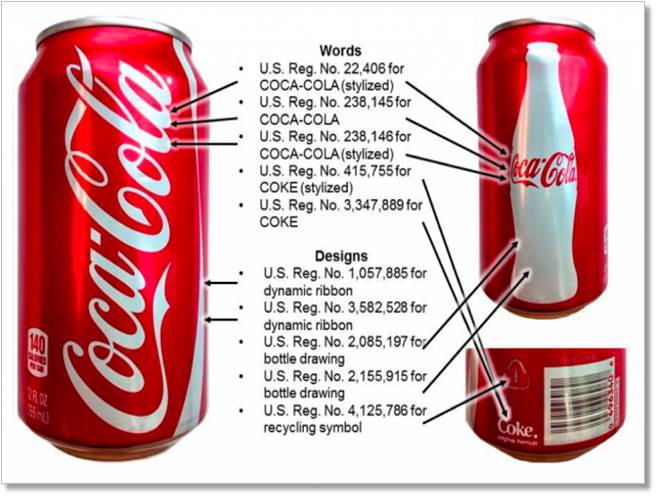
A strong single IP (intellectual property) right will give an edge to our new venture thus it´s critical to trademark the brand and all its visual elements. For instance, a ordinary can of Coke is protected by no less than 10 federal trademark registrations covering both words and designs.


It is also important to get a patent of the key aspects of our product but if that’s not possible (like in Coca-Cola´s case) we need to work obsessively to keep our recipe or ingredients secret. This secrecy not only will protect our product but it will also enhance other psychological effect known as “scarcity effect” (humans place a higher value on an object that is scarce). Eventually, technology (like food-chemical engineering in Coca-Cola´s case) will advance so that our product can be copied with near exactitude but by that time we will be so far ahead, with such strong brand and broad distribution, that just product (e.g. flavor) copying won’t bar from our objectives. Actually, the Coca-Cola´s “secret” recipe has been identified in the past decades and it has been published as follows (5):

Syrup:
  • Fluid Extract of Coca: 4 oz
  • Citric Acid: 3 oz
  • Citrate Caffein: 1 oz
  • Sugar: 30 pounds
  • Water: 2.5 gal
  • Lime Juice:1 qrt
  • Vanilla: 1 oz
  • Caramel: 1.5 oz (or color sufficient)

7X flavoring formula:
  • Alcohol: 8 oz
  • Orange Oil: 20 drops (0.5 grams)
  • Lemon Oil: 30 drops (0.75 grams)
  • Nutmeg Oil: 10 drops (0.25 grams)
  • Corriander Oil: 5 drops (0.125 grams)
  • Neroli Oil: 10 drops (0.25 grams)
  • Cinnamon Oil: 10 drops (0.25 grams)

Mix 5 gals of syrup with 2 oz of 7X flavor and then combine it with carbonated water at a ratio of 1-to-5 (one part syrup to five parts bubbly water) to make the soda. You can find detailed instructions here.


That´s the “secret” recipe and it has been already published in a few books. However, no other company has replicated this recipe because what will be its price? Without Coca-Cola scale, it will probably more expensive. And what about its distribution? Most likely not as broad as Coca-Cola’s. But then, why would a consumer purchase a beverage that is similar to Coca-Cola but it’s more expensive when she can purchase the original cheaper version in almost every corner of the world?

Thus, these are the seven elements that explain Coca-Cola’s success and that can help you to replicate it in your company:

  1. Huge market size
  2. Branded business with conditioned reflexes
  3. Product with operant conditioning
  4. Brand with classical conditioning
  5. Social-proof effect
  6. Efficient logistics and distribution
  7. IP protection

*****

Those seven elements explain the success of Coca-Cola, from its origin until today.

You can use them to build an equally successful company. That success is all built in well understood principles: the difficult part is to be consistent in implementing all of them at the same time without being sidetracked while chasing distractive or divergent opportunities.


___________________________________________________________

- Share here you opinion of this article

- Send this article by email

___________________________________________________________

Sources:
(1) “12 things about product-market fit”, Tren Griffin, Andreeseen Horowitz blog (a16z.com), February 18th, 2017
(2) “Donald T. Valentine. Early bay area venture capitalists: shaping the economic and business landscape”, interviews conducted by Sally Smith Hughes, University of California, 2009 http://digitalassets.lib.berkeley.edu/roho/ucb/text/valentine_donald.pdf
(3) “McDonald's: Behind The Arches”, John F. Love, Bantam Rev Sub edition, 1995. Note: The McDonalds brothers opened their first (tiny) drive-in restaurant in Arcadia, a suburb of Pasadena, California, northeast of Los Angeles, in 1937. Due to its success, then they moved and opened a larger store (600 square feet), the now famous store in San Bernardino in 1940 (at 14th and E Streets) which is considered by most reviews as McDonald´s first store, when in reality it was the second one (and it would not be until December 1948 that they would switch to the quick cheap self-service model that characterizes the chain nowadays).
(4) “Pour Your Heart Into It: How Starbucks Built a Company One Cup at a Time”, Howard Schultz and Dori jones Yang, Hachette Books, 1999; Company website https://www.starbucks.com/about-us/company-information/starbucks-company-timeline , http://www.starbucks.co.jp/en/company.html
(5) “For God, Country, and Coca-Cola”, Mark Pendergrast, Basic Books; Enlarged 2nd edition, 2000 (6) “The Average Consumption of Water Per Day”, Angela Ogunjimi, livestrong.com, November 11, 2015 http://www.livestrong.com/article/338496-the-average-consumption-of-water-per-day/
(7) “How Much Water Do People Drink?”, James Hamblin, The Atlantic, March 12, 2013 https://www.theatlantic.com/health/archive/2013/03/how-much-water-do-people-drink/273936/
(8) “Damn Right: Behind the Scenes with Berkshire Hathaway Billionaire Charlie Munger”, Janet Lowe, Apendix D, Wiley; New edition edition, 2003; via “Charlie Munger: Turning $2 Million Into $2 Trillion “, Mungerisms, April 2010
(9) “The Behavior of organisms: An experimental analysis”, B.F. Skinne, New York: Appleton-Century, 1938, with the influence of “The elements of psychology”, E.L.Thorndike, New York: A. G. Seiler, 1905
(10) “Conditioned reflexes: an investigation of the physiological activity of the cerebral cortex”, I.P. Pavlov, Oxford, England: Oxford Univ. Press Conditioned reflexes: an investigation of the physiological activity of the cerebral cortex, xv 430 pp., 1927
(11) “Choices, Values, and Frames”, Kahneman, D. & Tversky, A. , American Psychologist. 39 (4): 341–350, 1984
(12) “Influence: The Psychology of Persuasion”, Robert B. Cialdini, Harper Business; Revised edition, 2006


___________________________________________________________

Author: César Pérez Carballada

Article published in
http://www.marketisimo.com/

Continuar leyendo el resto del artículo...


Related Posts Plugin for WordPress, Blogger...